Usinage CNC complexe refers to precision components with a complicated shape that need to be machined with many different machining workmanship. The complex component can not be machined by just one kind of machining workmanship.
What is Complex CNC Machining?
At its core, complex CNC (Commande numérique par ordinateur) usinage is the process of using computer-controlled machine tools to manufacture intricate, high-precision parts that are often impossible or economically unviable to produce with conventional machining or simpler CNC operations.
There are many kinds of machining workmanship and machine equipment. Par exemple, High-speed CNC milling (3-axe, 4-axe, or 5-axis), Tournage CNC, Meulage de surfaces, Meulage de profil, Meulage au gabarit, Meulage sans centre, Internal and External Cylindrical Grinding, CNC Drilling, EDM à fil, Discharge EDM (electrode), Polissage, etc..
What are the complex components?
Complex components move beyond basic milling or turning of prismatic (block-like) shapes to encompass:
- Complex Geometries: Parts with intricate 3D contours, deep cavities, thin walls, and organic shapes (like those found in aerospace or medical implants).
- Tight Tolerances: Holding dimensional accuracies within a few microns (thousandths of a millimeter) over the entire part.
- Sophisticated Materials: Machining difficult-to-cut materials like hardened steels, HSS, carbure, and advanced composites.
- Multi-Axis Operations: Utilizing 4-axis, 5-axe, and even more advanced machines to access all sides of a part in a single setup.
Bien sûr. Here is a comprehensive overview of complex CNC machining, breaking down why it’s complex, the technologies involved, and its applications.
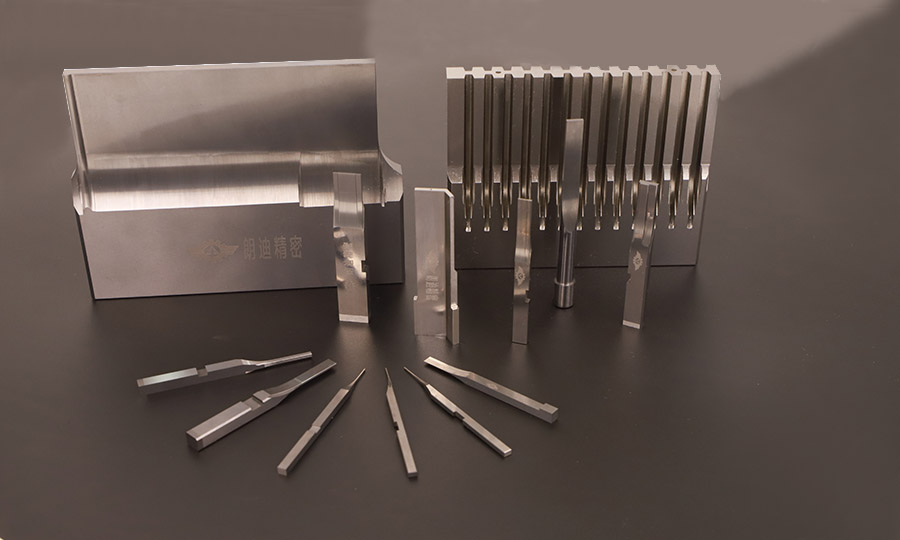
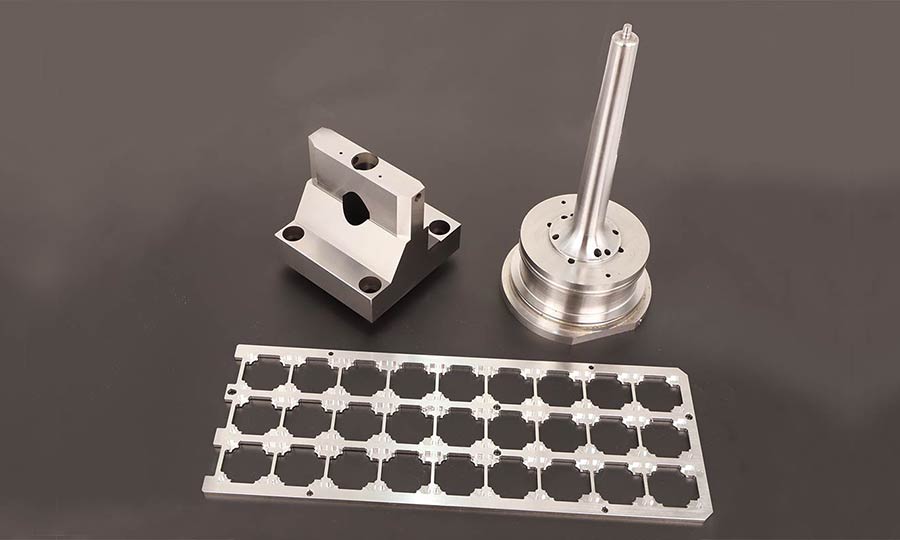
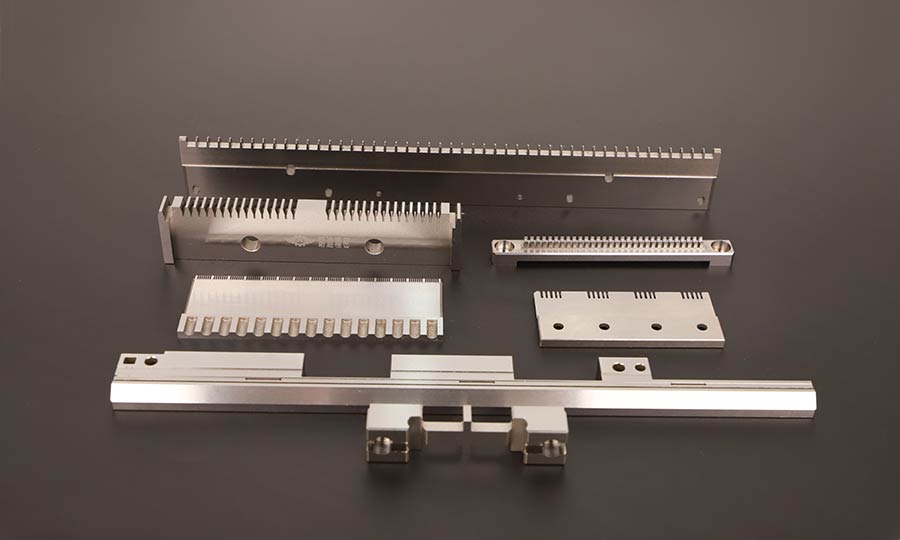
Le « Complexity » Factor: What Makes it Challenging?
Complexity in CNC machining arises from several interconnected factors:
- Part Geometry:
- Freeform Surfaces: Common in aerospace (turbine blades) and automotive (molds). Requires simultaneous movement of multiple machine axes.
- Deep Cavities & Narrow Recesses: Requires long, slender tools that are prone to deflection and vibration, challenging to maintain accuracy and surface finish.
- Thin-Walled Sections: Easily deform under the cutting forces of the tool, requiring specialized strategies like high-speed machining with light cuts.
- Small Features: Micro-machining of tiny holes, threads, and channels demands ultra-precise tools and machines.
- Précision & Tolérances:
- Tight Tolerances: Often within ±0.01 to ±0.005 mm or less. This requires not only a high-precision machine but also temperature control (to combat thermal expansion), expert tool selection, and meticulous quality inspection.
- Geometric Tolerancing: Controlling flatness, perpendicularity, true position, and runout adds another layer of complexity to the programming and setup.
- Advanced Materials:
- High-Temperature Alloys (par ex., carbure, Hss, Hastalloy): Extremely hard, retain their strength at high temperatures, and work-harden quickly, leading to rapid tool wear.
- Composites (par ex., Carbon Fiber): Abrasive nature wears down cutting tools rapidly and requires strategies to prevent delamination.
- Manufacturing Process:
- Multi-Axis Machining: Programming 5-axis toolpaths is far more complex than 3-axis. The programmer must avoid collisions and ensure the tool orientation is optimal for cutting efficiency and surface finish.
- Single-Setup Machining: A key goal of complex machining is to complete a part in one setup on a 5-axis machine. This eliminates errors that accumulate from moving the part between multiple machines.
- Multi-Workanship Machining: Some parts have a higher surface roughness that needs high-precision grinding; And some parts have small holes or irregular inner shapes that need Wire-cut EMD; And some parts have irregular height at the small places that need electrode discharge EDM to get the accurate dimensions.
Key Enabling Technologies for Complex Machining
- Advanced CNC Machinery:
- 5-Axis CNC Mills: The workhorse of complex machining. They can move a part along three linear axes (X, Y, Z) and rotate it on two additional axes (A and B, Par exemple). This allows the tool to approach the part from any direction.
- Multi-Task Machines (MTMs) / Mill-Turn Centers: Combine the capabilities of a lathe and a mill. They can turn, mill, drill, and tap a part complete in one chucking. Essential for complex rotational parts like turbocharger impellers.
- High-Speed Machining (HSM) Centers: Designed for very high spindle speeds and rapid feed rates, ideal for machining thin walls and fine details in molds and dies.
- Sophisticated CAM Software:
This is the brain behind the operation. CAM software translates the 3D CAD model into a set of instructions (G-code) for the CNC machine. For complex work, the software must generate efficient, collision-free toolpaths for multi-axis movements.
Features like Automatic Collision Avoidance, Tool Axis Tilting, et Adaptive Clearing are critical.
- Specialized Cutting Tools:
- Solid Carbide End Mills: For high rigidity and precision.
- Custom Form Tools: Designed to create a specific complex profile in a single pass.
- Tool Coatings (TiAlN, AlCrN): Increase tool life and allow for higher cutting speeds in tough materials.
- Coolant-through-Tool Systems: Deliver high-pressure coolant directly to the cutting edge, essential for managing heat in materials like titanium.
- Metrology and Quality Control:
After the complex parts finisxhed, we need to precisely measure the complex geometry of the finished part by measuring tools.
Applications of Complex CNC Machining
Complex CNC parts are critical in industries where performance, safety, and reliability are non-negotiable.
Mold & Mourir: Injection molds for plastic parts, stamping tools for sheet metal parts, and die-casting molds for metal parts. The molds and composants de moules de précision themselves are often highly complex with deep, detailed cavities.
Automobile & Racing: High-performance engine blocks, cylinder heads, composants de transmission, and custom suspension parts.
Aérospatial: Aubes de turbines, engine mounts, structural components, and landing gear parts. All require light-weighting (complex thin-walled structures) and are made from high-strength materials.
Médical & Dental: Orthopedic implants (genoux, les hanches), instruments chirurgicaux, and dental prosthetics. These often involve biocompatible materials like titanium and cobalt-chrome and have complex organic shapes.
Défense: Firearm components, optics mounts, and guidance system housings.
En tout,Complex CNC machining is the intersection of advanced machinery, sophisticated software, and deep engineering expertise.
It is a subtractive manufacturing process dedicated to producing the most challenging, high-value components that form the backbone of modern technology. The complexity lies not just in the part’s shape, but in the entire ecosystem of knowledge and technology required to produce it reliably and precisely.
Complex CNC Machining is a tough job